How InstaMed's InstaRelease Delivery Works
In this article
Short answer: InstaRelease is the named delivery-excipient blend inside InstaMed's strips — hydroxypropyl β-cyclodextrin, Penetratin and sunflower lecithin, printed on the SLEEP and ULTRATRUTIDE Supplement Facts panels at 3–4 mg per strip. It is the engineering behind a strip that carries a fixed dose and needs nothing else.
If you've read an InstaMed label or the brand's what is InstaMed story, you've seen the name. There's almost no third-party coverage of it, so this page does the useful work: what's physically in it, what each component is known for in formulation science, and what the brand says about it — status-tagged. For category context, see our explainer on permeation enhancers in sublingual products.
The format story, and why it's genuinely exciting
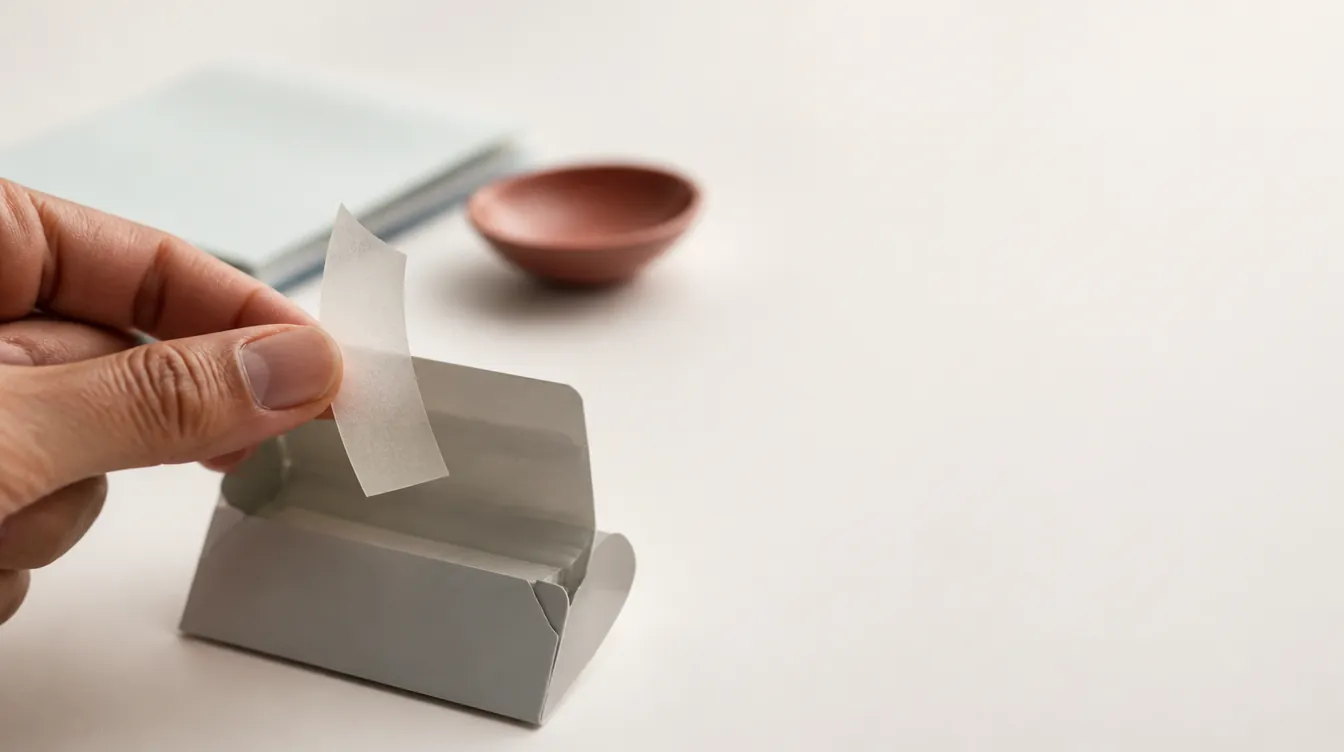
Oral dissolving film is a real, established dosage format with a genuine pharmaceutical literature — the same family as the breath strips and dissolvable wellness films you already trust. What InstaMed did was aim that format at peptides and NAD+: a thin, soft strip built on a pullulan and β-cyclodextrin base, pre-dosed, shelf-stable, portable. No vial, no reconstitution, no needle, no fridge. For anyone who has been curious about this category but put off by the supplies-and-syringes ritual, the strip removes the friction entirely — and InstaRelease is the name the brand puts on the part of the formula designed to help actives across.
What the label actually says
Everything verifiable about InstaRelease comes from two Supplement Facts panels:
- SLEEP lists InstaRelease at 3 mg per strip, alongside its actives (DSIP 200 mcg, GABA 20 mg, 5-HTP 10 mg).
- ULTRATRUTIDE (GLP-4) lists InstaRelease at 4 mg per strip, alongside 2 mg of ultratrutide.
Note how it sits on the label: listed as an ingredient blend, separate from the actives — and at 3–4 mg, it's a small fraction of a roughly 90 mg strip. Most of any InstaMed strip is the standard film base, which carries no brand name at all. Both products carrying the blend are available at open checkout; see the SLEEP sublingual strips or ULTRATRUTIDE GLP-4 strips pages to read the panels yourself.
What each component is known for
Here's the formulation-science picture, carefully separated from product-specific claims:
- Hydroxypropyl β-cyclodextrin (HP-β-CD) is a ring-shaped sugar derivative prized in pharmaceutical formulation for forming inclusion complexes — it can host a guest molecule inside its cavity, improving that molecule's solubility and stability
[established formulation science]. It's a pharma-grade cyclodextrin; the broader family spans regulatory statuses from broadly GRAS (γ-cyclodextrin) to intake-limited (β-cyclodextrin). - Sunflower lecithin is a food-grade phospholipid. In formulation work, phospholipids act as emulsifiers and can enable liposomal structures
[established formulation science]— and lecithin appears across InstaMed's unbranded film base, line-wide. - Penetratin appears as a named component on these two panels. We searched for verifiable third-party data on it and found none we could confirm — we can only describe it as printed on the label. We'd rather say "we don't know what this is beyond the name" than fill the gap with plausible-sounding invention.
What the brand says, status-tagged
InstaMed describes InstaRelease™ as its "delivery technology," with language like "rapid delivery designed for faster bioavailability" and "mouth to body delivery" through the buccal membranes [brand claim — unverified]. The brand has also referenced "9 pending patents" in its materials [brand claim — unverified]. Those are the brand's statements about its own product, reported here because they're what you'll encounter elsewhere — with the tag, so you always know who's talking.
On the name itself: public USPTO records show trademark applications for INSTAMED (serial 99080601) and INSTARELEASE, and no issued patents. A trademark protects a name; a pending application of any kind is not a grant.
The honest context, once
One passage, plainly: no published pharmacokinetic study exists for any InstaMed product, so no public data quantifies how much InstaRelease enhances absorption in a finished strip; two of its three components have well-characterized formulation roles, but mechanism-plus-label is not proof of performance; and neither SLEEP nor ULTRATRUTIDE currently has a published COA. We tag the brand's claims rather than repeat them, and we'll update this page when real data lands.
The bottom line
InstaRelease is a trademarked name for a small, thoughtfully chosen excipient blend — a pharma-grade cyclodextrin, a food-grade phospholipid, and one named component the public record can't yet explain — doing the carrying work inside the most user-friendly format this category has produced. The format story is real and genuinely appealing; the performance claims are the brand's, tagged as such. If you're evaluating the two products that carry it, weight the actives and the testing picture first — and open the SLEEP page to see the label for yourself.
The route those excipients are built to exploit is covered in full in the sublingual delivery science pillar.
---
These statements have not been evaluated by the Food and Drug Administration. This product is not intended to diagnose, treat, cure, or prevent any disease.
This content is for educational purposes only and is not medical advice. Consult a licensed healthcare provider before starting any new product. Individual results vary.
Reviewed by counsel against FDA structure/function guidance.
InstaRelease technology — quick answers
Is InstaRelease a drug or an active ingredient?
No. On both labels it's listed as a separate ingredient blend (3–4 mg) alongside the actives. It's a delivery-excipient system — ingredients intended to support the format, not the compounds doing the labeled work.
Is InstaRelease patented?
Public records show trademark applications for INSTARELEASE and INSTAMED, and no issued patents; the brand references pending patent applications [brand claim — unverified]. Trademark status protects the name, not the technology, and "pending" is not "granted."
Does InstaRelease make the strips absorb better?
That's the brand's claim [brand claim — unverified]. Two of its three components have legitimate formulation-science roles at the category level, but no published pharmacokinetic data demonstrates an absorption effect for any InstaMed product.
What is Penetratin?
A named component of the InstaRelease blend as printed on the SLEEP and ULTRATRUTIDE panels. We could not verify third-party data about it, so we describe it exactly as labeled and no further.
Educational content. This content is for educational purposes only and is not medical advice. Consult a licensed healthcare provider before starting any new product. Individual results vary.
FDA disclosure. These statements have not been evaluated by the Food and Drug Administration. This product is not intended to diagnose, treat, cure, or prevent any disease.
Related reading

Where to Buy InstaMed Sublingual Peptides Online
Where to buy InstaMed sublingual peptides: the official stores, the authorized-reseller channel (including this site), and how to buy with confidence.
Is InstaMed Safe? Ingredients, Testing, and Sourcing
Is InstaMed safe? A brand-specific look: familiar food-grade film ingredients, COAs for seven of twelve SKUs, and how to verify the rest yourself.

InstaMed Wholesale: How Clinics Stock the Line
InstaMed wholesale: what's documented — no monthly minimums, case packs, professional-only SKUs, gated pricing — and what to ask before applying.
The honest peptide brief
One email a month: new research on the compounds we cover, new lots and COAs, and zero hype. Unsubscribe anytime.
We never sell your address. 18+ only.