Peptide Strips vs Injections: Cost and Convenience
In this article
Short answer: Strips win the convenience ledger outright — no needles, no mixing, no refrigeration, no clinic visits. InstaMed's published per-box prices run $99–$198 depending on the SKU, against clinic injectable programs that typically run several hundred dollars once consultations and supplies are counted
[attributed to clinic pricing pages, August 2026].
Most "strips vs injections" pages argue about absorption and skip the number people actually typed into the search bar: what does each route cost, all-in? This article lays out documented and attributed figures, names each source inline, and stays honest about what the math can and cannot tell you. For the mechanism side — how sublingual absorption works — see our sublingual delivery science guide. This piece owns the cost and convenience frame; per-strip arithmetic lives in InstaMed pricing and value.
What injectable peptide programs actually cost
The injectable route usually means a prescription through a clinic or telehealth provider, and the peptide itself is only part of the bill. Figures attributed to clinic pricing pages retrieved August 2026 — ranges vary by provider, compound, and region:
- One Florida clinic publishes compounded injectable BPC-157 programs in the $150–$300 per month range, with first-month pricing reaching the mid-hundreds once consultation, lab work, and supplies are included; multi-peptide stacks run higher.
- Another provider lists a single-peptide BPC-157 protocol in the mid-hundreds per cycle, with the BPC-157 + TB-500 combination protocol approaching $800 per cycle.
- Industry pricing guides describe prescription peptide therapies generally ranging from a few hundred to over $600 per month once consultation fees, follow-ups, needles, and supplies are bundled in.
At the other end of the market, research-vial vendors sell lyophilized peptides at strikingly low per-milligram prices — but those products carry "research use only, not for human consumption" disclaimers, come with no sterility assurance, and are a different product category, not a bargain version of the same thing (more on sourcing quality below).
None of these figures are ours; they are attributed reporting, and all of them can change.
What sublingual strips cost
InstaMed's wholesale storefront gates pricing behind a login, and its retail storefront publishes per-box prices: $178 for BPC-157, $138 for GHK-Cu, $198 for Thymosin Alpha-1, $118 for NAD+, $145 for Strength, and $99 for glutathione. The blends now carry published prices too — $89 for SLEEP, $198 for NEURO, $199 for BOOST, $240 for KLOW, $299 for ULTRATRUTIDE, and $158 for PT-141+. InstaMed products are sold under the InstaMed brand (Salt Lake City/Draper, Utah); the contract manufacturer is not publicly disclosed, and tryinstamed.com is an authorized reseller.
What you do not pay for on the strip side: bacteriostatic water, syringes, alcohol swabs, sharps containers, refrigerated shipping, or clinic visits. Current availability is on the BPC-157 sublingual strips and NAD+ sublingual strips product pages.
The convenience ledger, described not hyped
The injection routine: receive lyophilized powder, reconstitute with bacteriostatic water, do the dilution math, draw a measured dose, refrigerate between uses, rotate sites, dispose of sharps. Travel means a cold chain and a kit. For many people this is entirely manageable; for others it's the reason a protocol gets skipped.
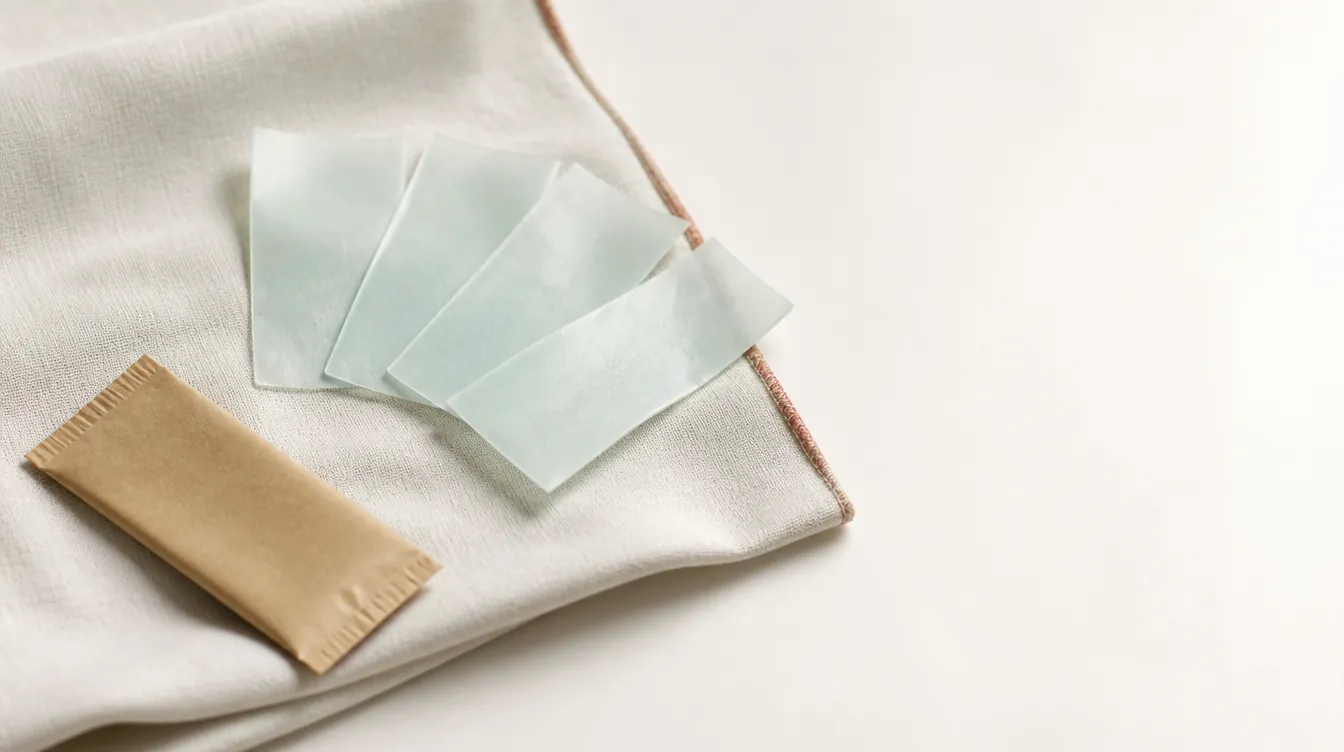
The strip routine: peel one pre-dosed strip from its packet, place it against the inner cheek or under the tongue, let it dissolve. No water, no mixing, no refrigeration requirement stated on the packaging, and a flat packet that fits in a wallet. Every strip carries the labeled amount, so there's no reconstitution math to get wrong.
That is a genuinely different daily experience — a fair description, not a superiority claim.
A sourcing note the vial price hides
If you're comparison-shopping against research-vial vendors, one data point belongs on the table: a 2026 preprint by Mendias & Awan analyzing 6,441 direct-to-consumer research-peptide samples across 14 compounds found that 41.6%–71.1% of samples failed basic quality criteria depending on the compound, with endotoxin contamination in 15% of samples (Mendias & Awan, 2026 — preprint, not yet peer-reviewed). Preprint findings need peer review before they're settled — but they're the best direct look at this supply chain anyone has published, and they explain a good chunk of the price gap: verification costs money, and the cheapest vial is cheap partly because nobody paid for it.
The honesty passage
Here it is plainly: cost per milligram is not cost per absorbed dose. On pure milligram math, strips lose to research vials, full stop. But that comparison is only clean if both routes deliver the same fraction of the labeled dose to the bloodstream — and nobody has published head-to-head human data on that for these specific products. The uncertainty cuts both ways: InstaMed's marketing describes buccal delivery favorably [brand claim — unverified], and we don't repeat those absorption claims as fact; equally, a clinic injection's higher price doesn't prove a better outcome for any given person. Anyone selling either route who quotes a precise bioavailability percentage is quoting marketing, not published human pharmacokinetics.
The bottom line
Strips trade milligram-efficiency for format simplicity, and for a lot of people that trade is a bargain: a pre-dosed, wallet-flat, needle-free routine at a published retail price, versus reconstitution math, cold storage, sharps, and clinic fees. Whether it's worth it for you is a personal budget calculation — and now you're making it with both sides visible. Verify the current figure on the relevant product page or with the clinic before deciding on any snapshot, including this one.
---
These statements have not been evaluated by the Food and Drug Administration. This product is not intended to diagnose, treat, cure, or prevent any disease.
This content is for educational purposes only and is not medical advice. Consult a licensed healthcare provider before starting any new product. Individual results vary.
Reviewed by counsel against FDA structure/function guidance.
peptide strips vs injections cost — quick answers
Are peptide strips cheaper than injections?
It depends which injection market you compare against. Compounded clinic programs typically run several hundred dollars per month including consultations and supplies [attributed to clinic pricing pages retrieved August 2026 — ranges vary by provider, compound, and region]; documented strip case pricing frequently lands below that. Research-grade vials are cheaper per milligram but are sold "for research use only," without sterility or dosing assurance — a different product category, not a bargain version of the same thing.
What hidden costs come with injectable peptides?
Per the clinic pricing guides we reviewed: initial consultation and lab work, bacteriostatic water, syringes, alcohol swabs, sharps disposal, refrigerated storage, and follow-up visits. The vial price is rarely the full price.
Do peptide strips need refrigeration or mixing?
No mixing is involved — strips are pre-dosed, and the packaging states no refrigeration requirement. That is a description of the format, not a stability guarantee; follow the storage instructions on the box.
Is a strip dose equal to an injection dose?
Not established. Cost per milligram is easy to compute; cost per absorbed milligram requires head-to-head human bioavailability data that has not been published for these products. Treat any precise absorption percentage from any seller — strip or injection — as unverified marketing until published data exists.
Educational content. This content is for educational purposes only and is not medical advice. Consult a licensed healthcare provider before starting any new product. Individual results vary.
FDA disclosure. These statements have not been evaluated by the Food and Drug Administration. This product is not intended to diagnose, treat, cure, or prevent any disease.
Related reading

Sublingual vs Topical GHK-Cu: Which Route Makes Sense?
GHK-Cu sublingual vs topical: topical holds the human cosmetic-study base; sublingual brings route logic and whole-body interest. Both explained.

Peptide Strips vs Troches: Which Oral Format Actually Makes Sense?
Peptide strips vs troches: how much each format holds is not how much it absorbs — and the real difference is the legal channel each one lives in.

Sublingual Strips vs Oral Capsules for Peptides
Strips vs capsules for peptides: first-pass metabolism, gut stability, which compounds favor the strip, and why strips win on daily adherence.
The honest peptide brief
One email a month: new research on the compounds we cover, new lots and COAs, and zero hype. Unsubscribe anytime.
We never sell your address. 18+ only.